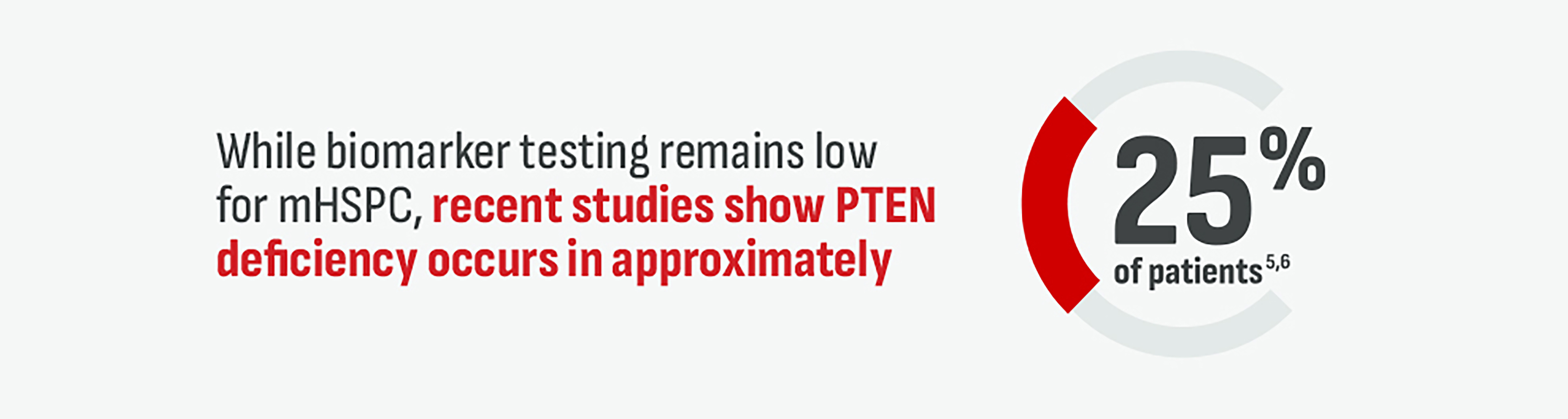
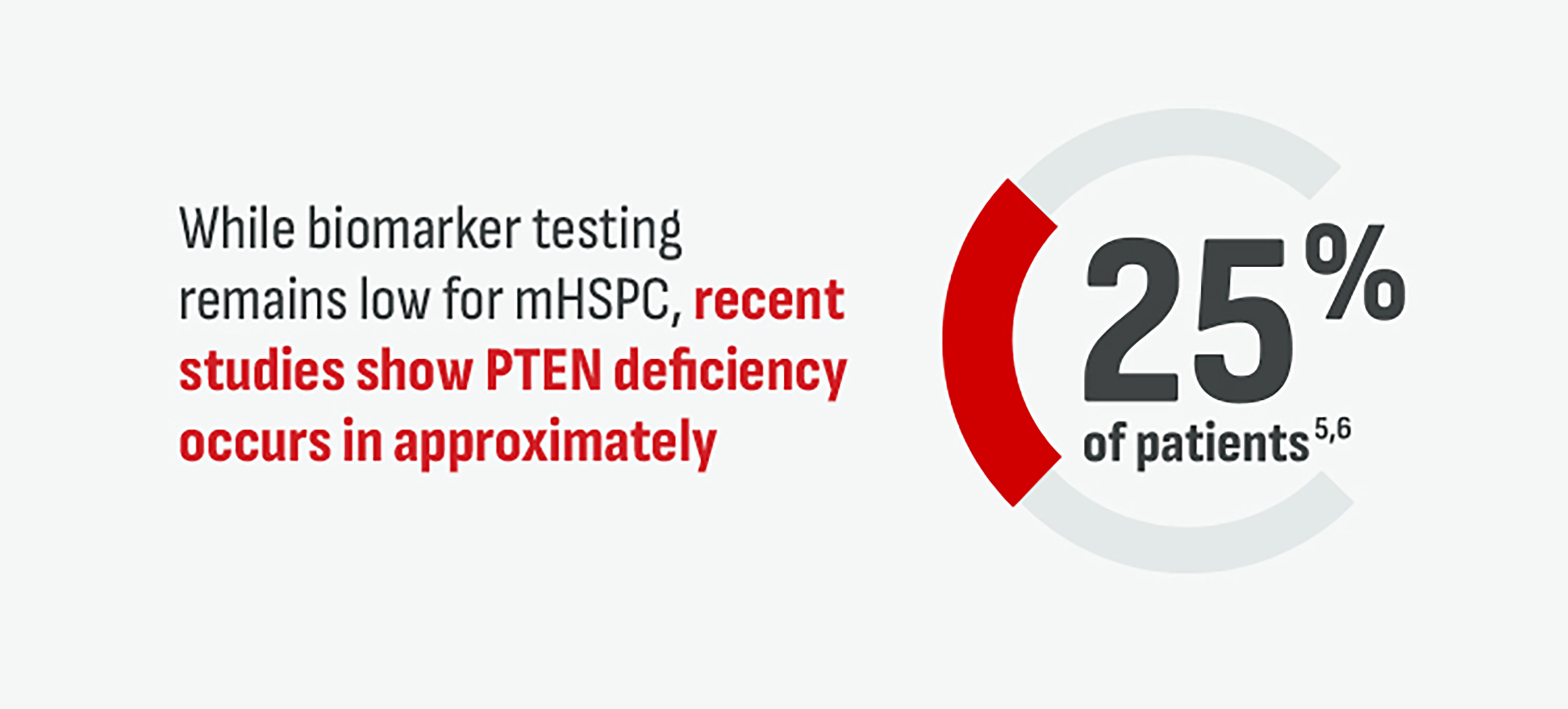
With your busy practice, you probably see many patients presenting with mHSPC. But what is the potential value in determining their PTEN status?
PTEN deficiency correlates with more aggressive mHSPC and worse prognosis.1‑4
Identifying PTEN deficiency
Testing for PTEN deficiency in mHSPC may offer a way to better understand outcomes and may allow for potential biomarker-targeted treatment approaches.1,6
IHC testing, a method to evaluate protein expression, is a preferred way to test for PTEN deficiency in prostate cancer.1
Testing for PTEN deficiency in mHSPC may offer a way to better understand outcomes and may allow for potential biomarker-targeted treatment approaches.1,6
IHC testing, a method to evaluate protein expression, is a preferred way to test for PTEN deficiency in prostate cancer.1
IHC=immunohistochemistry; mHSPC=metastatic hormone-sensitive prostate cancer; PTEN=phosphatase and tensin homolog.
References: 1. Jamaspishvili T, Berman DM, Ross AE, et al. Clinical implications of PTEN loss in prostate cancer. Nat Rev Urol. 2018;15(4):222-234. doi:10.1038/nrurol.2018.9 2. Zhang JY, Kong YY, Wang QF, et al. Prognostic value of PTEN in de novo diagnosed metastatic prostate cancer. Asian J Androl. 2022;24(1):50-55. doi:10.4103/aja.aja_39_21 3. Repka MC, Sholklapper T, Zwart AL, et al. Prognostic utility of biopsy-based PTEN and ERG status on biochemical progression and overall survival after SBRT for localized prostate cancer. Front Oncol. 2024;14:1381134. doi:10.3389/fonc.2024.1381134 4.
Gupta S, To MT, Graf R, Kadel EE 3rd, Reilly N, Albarmawi H. Real‑world overall survival and treatment patterns by PTEN status in metastatic castration-resistant prostate cancer. JCO Precis Oncol. 2024;8:e2300562. doi:10.1200/PO.23.00562 5. Luo J. Non-invasive actionable biomarkers for metastatic prostate cancer. Asian J Urol. 2016;3(4):170-176. doi:10.1016/j.ajur.2016.09.003 6. Stopsack KH, Nandakumar S, Wibmer AG, et al. Oncogenic genomic alterations, clinical phenotypes, and outcomes in metastatic castration-sensitive prostate cancer. Clin Cancer Res. 2020;26(13):3230-3238. doi:10.1158/1078-0432.CCR-20-0168
This information is intended for US healthcare professionals only.
This content is sponsored by AstraZeneca, and ION Oncology Practice Network has not independently reviewed or verified the information provided by AstraZeneca.
This email was sent to karleigh.bard-marsh@cencora.com because you have an account with or are a valued partner of Cencora Specialty GPOs | ION Oncology Practice Network. If you no longer wish to receive these types of emails, please click here to unsubscribe or update your email preferences.