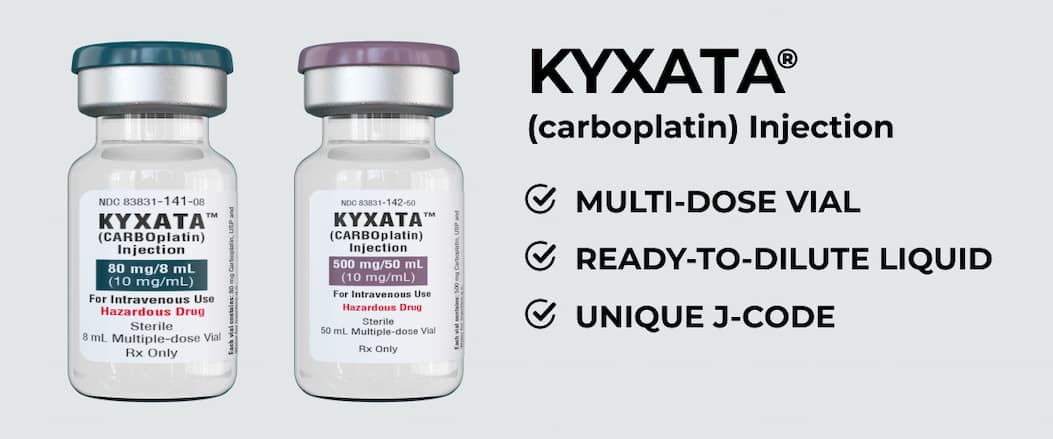
NEW UNIQUE J-CODE J9278
EFFECTIVE APRIL 1, 2026 |
|
|
|
|
INDICATIONS AND IMPORTANT SAFETY INFORMATION, INCLUDING BOXED WARNING
|
|
|
|
|
Initial Treatment of Advanced Ovarian Carcinoma |
|
KYXATA®, as part of a combination regimen, is indicated for the initial treatment of adults with advanced ovarian carcinoma. |
|
Recurrent Advanced Ovarian Carcinoma |
|
KYXATA is indicated for treatment of adults with ovarian carcinoma recurrent after prior chemotherapy. |
|
IMPORTANT SAFETY INFORMATION |
|
WARNING: HYPERSENSITIVITY REACTIONS, INCLUDING ANAPHYLAXIS |
|
- Serious and life-threatening hypersensitivity reactions, including anaphylaxis, can occur with KYXATA within minutes of administration during any cycle.
- Immediately withhold KYXATA for severe hypersensitivity reactions and administer appropriate treatment for management of the hypersensitivity reaction.
|
|
Hypersensitivity Reactions |
|
Hypersensitivity, including anaphylaxis, can occur in patients treated with KYXATA. Hypersensitivity reactions occurred in 2% of patients treated with carboplatin and included rash, urticaria, erythema, pruritus, bronchospasm, and hypotension. These adverse reactions may occur within minutes of administration and during any cycle. There is an increased risk of allergic reactions, including anaphylaxis, in patients previously exposed to platinum-based therapy or after 6 cycles of carboplatin. |
|
Monitor patients receiving KYXATA for hypersensitivity reactions. Ensure supportive equipment and medications are available to treat severe hypersensitivity reactions. Severe hypersensitivity reactions may require immediate discontinuation of KYXATA. |
|
Myelosuppression (leukopenia, neutropenia, and thrombocytopenia) is dose-dependent may be severe, and can cause fatal infections or hemorrhage in patients treated with KYXATA. |
|
Grade 3-4 neutropenia occurred in 16% of the patients treated with carboplatin as a single agent. Grade 3-4 thrombocytopenia occurred in 25% of patients with ovarian cancer. Febrile neutropenia may occur. Blood product transfusions were required in 26% (44% of pretreated) of patients with ovarian cancer treated with carboplatin as a single agent. Infectious and hemorrhagic complications each occurred in 5% of the patients treated with carboplatin as a single agent. Fatal adverse reactions occurred in less than 1% of patients treated with carboplatin as a single agent.
|
|
Patients with impaired kidney function are at increased risk of severe myelosuppression and may require dosage modifications. |
|
Monitor complete blood counts prior to each cycle and as clinically indicated. If myelosuppression occurs, modify KYXATA dosage when required. |
|
KYXATA can induce emesis, which can be more severe in patients previously receiving emetogenic therapy, and is dose-dependent. Administer pre-treatment and post-treatment antiemetics as clinically indicated. |
|
Monitor and manage patients with antiemetics, or fluid replacement, as clinically indicated. Consider withholding or delaying KYXATA if nausea or vomiting is severe or intolerable and is not responsive to antiemetics. |
|
Peripheral neuropathy, including paresthesia, can occur in patients treated with KYXATA. |
|
Peripheral neuropathy occurred in 4% of patients receiving carboplatin as a single agent (6% of pretreated patients with ovarian cancer). Peripheral neuropathy occurred in 10% of patients older than 65 who were previously treated with carboplatin. |
|
Prolonged treatment, treatment with other platinum-containing therapies, or use in combination with other drugs that cause peripheral neuropathy may increase the incidence or severity of peripheral neuropathy. |
|
Monitor for signs and symptoms of peripheral neuropathy. Withhold, reduce, or discontinue KYXATA depending on the severity and persistence of peripheral neuropathy as clinically indicated. |
|
Based on findings in animals and its mechanism of action, KYXATA can cause fetal harm when administered to a pregnant woman. Administration of carboplatin to pregnant rats caused adverse developmental outcomes, including embryo-fetal lethality and structural abnormalities. |
|
Advise pregnant women and females of reproductive potential of the potential risk to a fetus. Advise females of reproductive potential to use effective contraception during treatment with KYXATA and for 6 months after the last dose. Advise males with female partners of reproductive potential to use effective contraception during treatment with KYXATA and for 3 months after the last dose. |
|
Most common adverse reactions, including laboratory abnormalities, in patients with advanced ovarian cancer who received KYXATA in combination with cyclophosphamide (≥30%) are leukopenia, neutropenia, nausea and vomiting, anemia, thrombocytopenia, hypomagnesemia, other gastrointestinal adverse reactions, alopecia, asthenia, and pain. |
|
Most common adverse reactions, including laboratory abnormalities, in patients with recurrent ovarian cancer who received KYXATA as a single agent (≥30%) are nausea and vomiting, anemia, neutropenia, thrombocytopenia, hyponatremia, hypomagnesemia, hyperphosphatasemia, and hypocalcemia. |
|
Use with Aminoglycosides: Avoid concomitant use of aminoglycosides with KYXATA. Concomitant use of KYXATA with aminoglycosides increased renal toxicity and ototoxicity. |
|
USE IN SPECIFIC POPULATIONS |
|
Pregnancy: Advise pregnant women and females of reproductive potential of the potential risk to a fetus. |
|
Lactation: Advise women not to breastfeed during treatment with KYXATA and for 1 week after the last dose. |
|
Females and Males of Reproductive Potential: Advise females of reproductive potential to use effective contraception during treatment with KYXATA and for 6 months after the last dose; and advise male patients with female partners of reproductive potential to use effective contraception during treatment with KYXATA and for 3 months after the last dose. |
|
Geriatric Use: Elderly patients treated with carboplatin were more likely to develop severe thrombocytopenia or peripheral neuropathy than younger patients. Consider renal function when selecting the KYXATA dose for older adults since they often have decreased renal function. To minimize the risk of toxicity in older adults, calculate the dose based on AUC. |
|
Renal Impairment: Reduce the dose for patients with creatinine clearance (CLcr) of 16 to 59 mL/min who will be administered a dose based on body surface area. A recommended dose of KYXATA has not been established for patients with a Clcr <16 mL/min. |
|
|
|
|
DOSAGE AND ADMINISTRATION GUIDELINES |
|
It is very important that the dosage, preparation and administration instructions provided in the full prescribing information are strictly followed to reduce the risk of severe adverse reactions. |
|
Administer KYXATA in a setting where cardiopulmonary resuscitation medication and equipment are available. |
|
Premedicate patients with antiemetics prior to each infusion of KYXATA for the prevention of nausea and vomiting. Continue antiemetics following infusion as needed. |
|
Do not use needles or intravenous infusion sets containing aluminum; aluminum reacts with carboplatin causing precipitate formation and a loss of potency. |
|
|
|
|
There is no known antidote for KYXATA overdosage. The anticipated complications of overdosage would be secondary to bone marrow suppression and/or hepatic toxicity. Patients receiving overdosages of carboplatin experienced severe liver function test abnormalities. Loss of vision, which can be complete for light and colors, has been reported after the use of carboplatin at doses higher than the recommended approved dosage for KYXATA. Vision recovers totally or to a significant extent after discontinuation of carboplatin. Clinically significant hearing loss has been reported to occur in pediatric patients when carboplatin was administered at higher than approved recommended doses for KYXATA and in combination with other ototoxic agents. KYXATA is removed by dialysis.
|
|
Closely monitor patients suspected of receiving an overdose, including for the adverse reactions described above, and administer appropriate supportive treatment. |
|
To report SUSPECTED ADVERSE REACTIONS, contact Avyxa Pharma, LLC at 1-888-520-0954 or FDA at 1-800-FDA-1088 or www.fda.gov/medwatch |
|
|
|
|
All trademarks are registered property of their respective owners. |
|
©2026 Avyxa Pharma, LLC. All rights reserved. US-KYX-0009-1 |
|
|
|
|
|